What Dealers Sell You as 'Paint Protection' at Delivery
The paperwork is done, the keys are nearly in your hand, and someone asks whether you want the car protected before you drive it out. The offer is usually short on nouns: a package name, a number of years, a figure. It is worth slowing down for ten minutes, because the phrase covers at least three different products — and the gap between the cheapest and the most protective of them is the difference between a surface that looks good for a season and one that stops a stone chip. If you already know film is the direction you want, our paint protection film service in Sharjah sets out coverage, panels and warranty.
What does "paint protection" actually mean at a dealership?
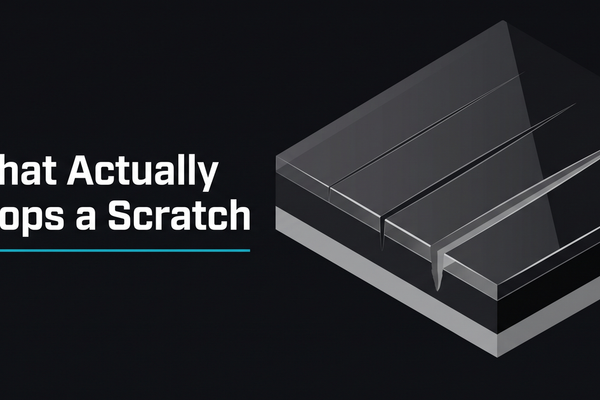
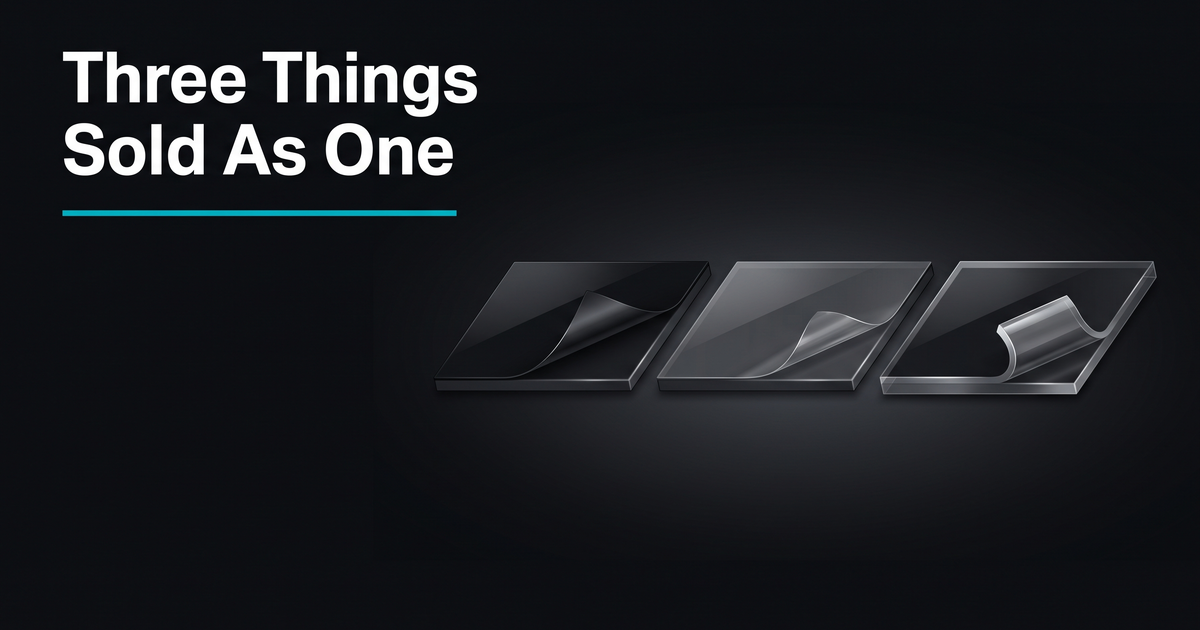
It means one of three things, and the word on the invoice rarely tells you which. The first is a wax or paint sealant: a thin sacrificial layer that improves gloss and makes rinsing easier for weeks to months. The second is a liquid coating that cures chemically onto the clear coat. The third is a physical film bonded to the panel.
They are not tiers of the same product. They are different materials doing different jobs, and only the third has enough thickness to absorb an impact. Ask which of the three is being installed before anything else, because every other question depends on the answer.
Does a brand new car need paint protection?
New paint is the best-condition paint the car will ever have, which is exactly why protecting it early is cheaper than correcting it later — but "needs" is too strong for most of the options. A new car needs nothing applied to it to be driven safely or kept under warranty. What a new car has is a surface with no swirls or etching in it yet, and both film and coatings are clear: they take the surface beneath them at face value and lock in whatever is already there.
So the honest version is that delivery is good *timing* rather than a requirement. Where the car parks, how it will be washed, and how much of the front end faces Gulf highway traffic matter more than the fact that it is new.
What is the difference between paint protection film and ceramic coating?
Thickness, and what that thickness can do. A coating is chemistry: one manufacturer's technical data sheet lists the product as a "Siloxane Polymer Blend", a "Clear, colorless liquid" applied in two coats with a cure time of about four hours, and sells it on gloss, water beading and slickness "for five years when properly maintained". Nothing in that sheet claims it stops a stone.
Film is a manufactured sheet. One film data sheet gives a polyurethane construction at 0.19 mm (7.5 mil) with its adhesive and names "stone chips, scratches, bug damage, road tar" among what it guards against; another manufacturer's data sheet specifies a 165 micron face film and records a pass on SAE J400, the laboratory gravel-impact test.
| Wax or sealant | Liquid coating | Paint protection film | |
|---|---|---|---|
| What it is | A thin sacrificial top layer | A siloxane liquid that cures on the paint | A polyurethane sheet bonded to the panel |
| Published thickness | Not specified on data sheets | Not specified on data sheets | 0.19 mm with adhesive, or a 165 micron face film |
| Stops stone chips | No | No — no data sheet claims it | Yes, within the impact range it is tested for |
| Stops wash swirls | No | Not prevented, though marring often polishes out more easily | Largely, on the panels it covers |
| Published life | Weeks to months | Up to five years with proper care and maintenance | Up to 7 to 10 years depending on the product |
| What it mainly buys | Gloss and easier rinsing | Gloss, chemical resistance, easier cleaning | Physical impact protection |
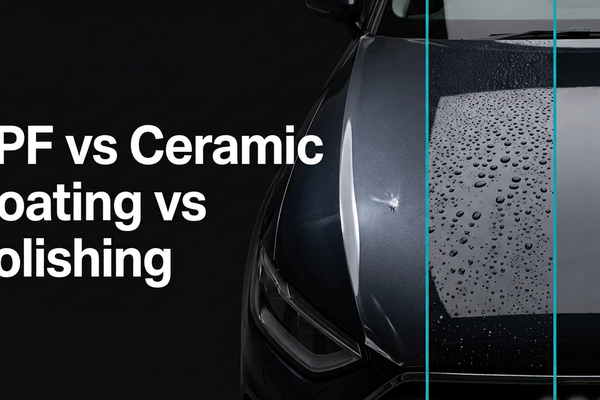
The two are often sold together, and that is legitimate: a coating applied over film gives the film an easier-to-clean surface. What is not legitimate is a coating sold as though it were a film. If the comparison is still open for you, PPF vs ceramic coating vs polishing works through which one a given car actually needs, and our nano-ceramic coating page sets out what a coating is for.
Is the dealer's paint protection package worth it?
It depends almost entirely on which of the three it is, and on what the warranty excludes. A film package at the handover desk can be good value, because the car is clean, undriven and the paint is perfect — the ideal condition for installation. A sealant sold with a multi-year promise is a different proposition, because the published life of that material is months.
Two things decide it:
What is actually being installed, and on which panels. "Front end" can mean a partial bonnet and bumper, or a full bonnet, wings, mirrors and headlights. The panel list is the product. A package with no panel list on the invoice is a price with nothing attached to it.
What the warranty excludes. This is where the years go. One manufacturer's data sheet states that abrasion and loss of gloss "are not covered by any" warranty from that manufacturer, because "these changes are considered normal wear and tear", and that products containing petroleum distillates or solvents such as soaps, waxes or protective coatings "void any warranty". The same sheet publishes a seven-year durability figure and then notes a two-year reduction in durability for the hottest, highest-UV regions it lists. A warranty year quoted at a desk in Sharjah is not automatically the same year printed for a milder climate.
Be equally careful with hardness claims. "9H" comes from ASTM D3363, a pencil test that determines "the film hardness of an organic coating on a metal or similarly hard substrate in terms of drawing leads or pencil leads of known hardness" — and the standard itself describes the result as useful "in providing relative rankings". It is a laboratory ranking against pencils, not a statement that the car cannot be scratched.
Send us the package name and the panel list you were offered, and we will tell you which of the three it actually is.
Message us on WhatsAppWhat should you ask before signing at the delivery desk?
Six questions, and all six answers belong in writing on the invoice rather than in conversation. UAE law is unusually helpful here. Under Federal Law No. 15 of 2020 on Consumer Protection, the provider "shall be required to provide the consumer with a detailed invoice containing its trade name, address, commodity type, price and quantity or the service type, price and details", and that invoice "must be in Arabic", with any other language added alongside.
- Which of the three is it — a sealant, a coating, or a film?
- Which panels, named individually, not "the front".
- How long is the published durability of the material itself, and in which climate was that figure published?
- What does the warranty exclude? Ask specifically about abrasion, loss of gloss, yellowing and edge lifting.
- Who honours the warranty — the dealership, the installer, or the material manufacturer — and what happens if the car is sold?
- Is the work done in-house or sent out, and when, given that a coating needs cure time and film needs a clean, controlled bay?
The same law makes the answers enforceable rather than decorative. Article 10 obliges a provider to "guarantee the service it provided and that it is free from defects and flaws during a period commensurate with the nature of such service, otherwise it shall return the amount paid by the consumer or a part thereof, or correctly re-provide the service". Article 17 prohibits describing a service "in a manner containing false data". Article 21 voids any contract term that would exempt the provider from those obligations. The government's own consumer protection guidance adds the practical route if something goes wrong: the Ministry of Economy on 800 1222, or the Department of Economic Development in your emirate.
Can you add paint protection after you have taken delivery?
Yes, and for most owners nothing is lost by waiting a week. The one real cost of delay is exposure: every kilometre before installation is a kilometre in which a stone can land, and a chip already in the paint will still be there under a clear film afterwards. Film and coatings are both applied to a decontaminated, corrected surface, so a car collected today and protected next week is in practice the same job.
What you gain by waiting is the ability to compare on the panel list and the warranty rather than deciding while the keys are being handed over. If you want to work through the coverage question first, how to choose the right PPF covers the panel-by-panel decision, and whether paint protection film is worth it sets out the cases where the answer is no.
Frequently asked questions
Is paint protection worth it on a new car? Film usually is, if the car does highway kilometres or you intend to keep it: it is the only one of the three with published impact testing behind it. A coating is worth it for gloss, chemical resistance and easier washing, which are real but different benefits. A wax or sealant sold with a multi-year promise is the one to question, because its published life is measured in weeks to months.
What is the best protection for new car paint? There is no single answer, because the three products do different jobs. The ordering most owners end up with is film on the impact zones at the front, a coating over the rest of the car for gloss and cleaning, and a wash routine that does not put swirls in either. Which panels get film is the decision worth spending time on.
Does paint protection increase the resale value of a car? Indirectly, by keeping the paint original. A car with no stone chips in the bonnet and no swirl marks in the panels presents better and avoids the discount a buyer applies for visible paint damage. No published figure attaches a specific resale number to a protection package, so treat any precise percentage quoted at a desk as a sales claim rather than data.
Can paint protection film and a coating be used together? Yes, and it is common. The film takes the impacts, and a coating applied over it makes the film's surface easier to clean. Follow the film manufacturer's maintenance instructions in that case — one data sheet warns against waxes containing dyes, abrasive polishes and rubbing compounds, because "the abrasive particles will damage the film surface and result in a loss of surface quality".
What if the protection fails before the warranty runs out? Go back to whoever sold it to you with the invoice. Under Article 12 of the consumer protection law, where a flaw is found in a service the provider is required to re-provide it without charge; Article 10 adds the alternative of returning the amount paid, in whole or in part. That is why the detailed invoice matters more than the brochure.
Not sure what you were actually offered?
Send us the package name and whatever the desk wrote down. We will tell you which of the three materials it is, what the panel list leaves uncovered, and whether it is worth taking at delivery or worth doing properly afterwards.
Armor Car Care Center — Basement Parking, 06 Mall, Al Badee Rd, Al Juraina, Sharjah Tel: +971 58 211 8700
Decided you want a real physical layer rather than a liquid? Coverage, panels and warranty terms are set out on our film protection page, and how to choose the right PPF walks through the panel decision. Still weighing it up? PPF vs ceramic coating vs polishing compares all three. When you know what you want, book a slot.