How to Protect Your Car's Paint From Scratches in the UAE — What Works and What Doesn't
Every scratch defence sold in the UAE is sold the same way — a clear layer, a long warranty, a promise about stone chips. The useful question is narrower: which marks does each one actually stop? Below are five defences ranked by what they prevent, with the figures the manufacturers publish. If film is the direction you are leaning, our paint protection film service in Sharjah sets out coverage and warranty.
What actually scratches car paint in the UAE?
Three different things, needing three different answers. The first is washing: fine, shallow swirl marks in the clear coat, left by dirty sponges, reused towels and automatic washes with rotating brushes — the most common damage on any car, and almost entirely self-inflicted. The second is contact: door edges, shopping trolleys, keys and kerbs, deeper and usually through the clear coat into the colour. The third is impact: stones off the road, which chip rather than scratch.
Dust is what makes the first category worse here than in milder climates. Abrasive particles sitting on a panel become grinding paste the moment a cloth is dragged over them, which is why one manufacturer's care instructions tell owners to keep abrasive polishes and rubbing compounds off a protected surface entirely: "The abrasive particles will damage the film surface and result in a loss of surface quality."
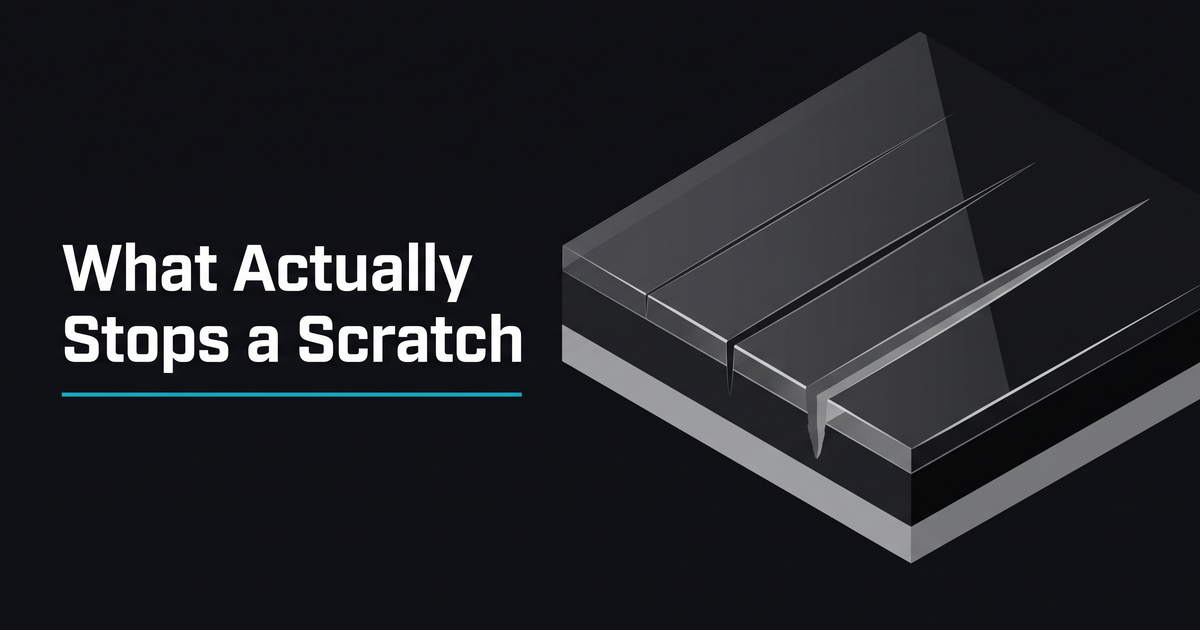
Which scratches can each defence actually stop?
Ranked by what they prevent rather than what they cost:
| Defence | Wash swirls | Parking scuffs and door edges | Stone chips | What it is really for |
|---|---|---|---|---|
| Where and how you park | No effect | Prevents many of them | Prevents some | Avoiding the contact in the first place |
| Wash routine (two buckets, clean microfiber, no brush wash) | Prevents most of them | No effect | No effect | The single biggest controllable cause |
| Wax or paint sealant | No | No | No | Gloss and easier rinsing, for weeks to months |
| Nano-ceramic coating | Slightly reduces, does not prevent | No | No | Gloss, slickness, chemical and UV resistance for years |
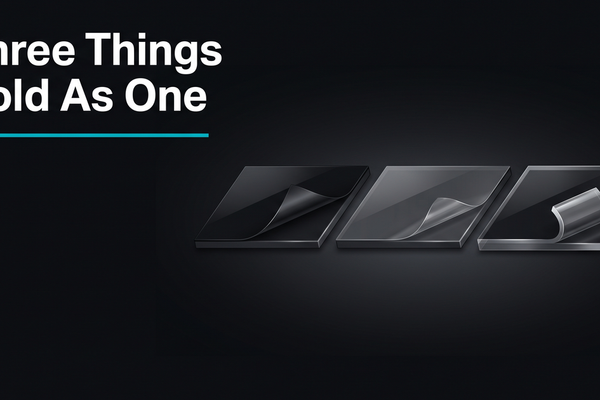
| Paint protection film | Takes them in the film instead of the paint | Takes the scuff instead of the paint | Absorbs the impact | A physical sacrificial layer |
Read down the first column and the point appears: the defence that prevents the most common damage is free, and the one that costs most is the only one that touches the rarest.
Why is a ceramic coating not scratch protection?
Because it is chemistry, not thickness, and the manufacturers say so themselves. One coating data sheet describes a siloxane polymer blend applied to "provide enhanced depth and luster to an automotive finish as well as a slick surface for easy maintenance", lists chemical resistance against road salt, harsh detergents and acid rain, and promises water beading "for up to five years with proper care & maintenance". Scratch resistance is not on that list.
The same document goes further the other way. Its application instructions warn against pressing a microfiber cloth into the paint because "this could cause scratches to the surface", and say that reusing a cloth "could result in cured coating scratching the paint surface". A product whose own instructions explain how it can scratch paint is not a scratch barrier.
None of that is an argument against coatings. A nano-ceramic coating does what the data sheet says — keeps the car cleaner, makes contaminants easier to remove, holds gloss through UV exposure — and our ceramic coating service exists for those reasons. It is an argument against buying one as armour.
What does "9H" actually mean on a coating?
It means a pencil. The figure comes from ASTM D3363, the Standard Test Method for Film Hardness by Pencil Test, whose scope is "a procedure for rapid, inexpensive determination of the film hardness of an organic coating on a metal or similarly hard substrate in terms of drawing leads or pencil leads of known hardness". Graded leads are pushed across a cured film until one marks it; 9H is simply the hardest lead on the drawing scale.
Three things follow, all in the standard itself. The test was written for coatings on metal panels in a laboratory, not a car park. The standard says the method "has been found to be useful in providing relative rankings for a series of coatings that exhibit significant differences in film hardness", and cautions against comparing coatings of similar hardness at all. And a pencil lead is not a key, a trolley or a stone.
So 9H is a real number from a real standard — and not a claim that the coating cannot be scratched.
Not sure which of these your car actually needs? Send us the make, model and where it parks, and you will get a straight answer.
Message us on WhatsAppDoes PPF protect against parking scratches and door dings?
Against the scratches, yes — against the dings, no, and the difference is thickness versus hardness. Paint protection film is a polyurethane sheet with real substance: one manufacturer's data sheet puts the film with its adhesive at 0.19 mm (7.5 mil) and names rocks, keys, salt and bugs among what it guards against. A door edge, a trolley corner or a bag buckle meets that layer first, and the mark stays in a sacrificial sheet instead of your paint.
Two published figures explain why it holds up. Another manufacturer's data sheet records a pass on SAE J400, the laboratory gravel-impact test, for a face film of 165 microns over 50 microns of adhesive. And the self-healing is thermal: the first data sheet describes minor scratches that "disappear with heat applied to the film surface". Here that heat is free for half the year — the National Center of Meteorology's climate normals for Dubai record a mean daily maximum of 40.6°C in July and 40.4°C in August, with six consecutive months averaging 35°C or higher. A scuff picked up in August often closes up in the sun by itself.
Where it stops is the metal underneath. A knock hard enough to deform a panel deforms it through the film, because nothing 0.19 mm thick resists a dent. And the film's own wear is not covered: the second data sheet's warranty excludes "Abrasion and Loss of Gloss" and calls those changes "normal wear and tear." Film moves the damage off your paint rather than making it disappear.
Do automatic car washes scratch paint?
Brush washes do, routinely, and this is the cheapest problem on the page to fix. Rotating brushes carry grit from the car before yours, and that grit is dragged across your clear coat under pressure — the mechanism behind the fine circular swirls visible on almost any dark car in direct sun. Touchless and hand washing avoid it.
The rest is habit: two buckets so rinsed-off grit does not go back on the car, clean microfiber rather than a reused sponge, a pH-neutral shampoo, and rinsing dust and bird droppings before they are wiped dry. One film data sheet specifies the chemistry it wants — a cleaner that is "wet, non-abrasive, without solvents, and have a pH value between 6 and 8" — and the same rules serve bare paint. Swirls already there are a polishing job, not a protection job; our guide to car polishing explains what correction can and cannot remove.
Which is better for protecting black car paint, ceramic or PPF?
For scratches specifically, film — and dark paint is why the question gets asked at all. Black and dark-grey finishes do not scratch more easily than light ones; they show what every car has. Fine swirls scatter light, and against a dark background that reads as a haze silver and white hide.
That shifts the ranking in one direction only: on a dark car the marks you want prevented are mostly wash swirls, so the wash routine matters more than on any other colour. A coating still earns its place for gloss and for needing fewer washes. Many owners run both.
How should you choose for your car?
Four honest cases:
- Fix the wash routine first, whatever else you do. It is free, it addresses the most common damage, and no film or coating compensates for a brush wash.
- Choose film if the car parks outdoors in public and you are keeping it. Contact damage is the only thing here that a physical layer reliably prevents.
- Choose a coating if the complaint is gloss, dust and washing effort. That is what the data sheets promise, and they deliver it.
- Choose correction before either. Both lock in the surface underneath, so existing swirls should be polished out first or they are sealed in.
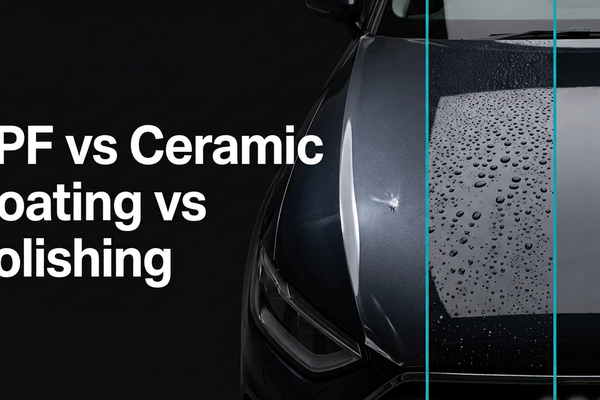
For the three-way version of this decision across protection types rather than scratches alone, see our comparison of PPF, ceramic coating and polishing.
Frequently asked questions
Can scratches be buffed out of car paint? Shallow ones, yes. Machine polishing removes a little clear coat to level the surface around a scratch, so marks inside the clear coat can go completely. A scratch you can catch a fingernail in has usually reached the colour, and polishing softens its edges rather than erasing it.
Does wax protect against scratches? No. Wax and paint sealants are thin sacrificial layers that improve gloss and make rinsing easier for weeks to months. They have no meaningful thickness and no impact resistance — maintenance, not protection.
Is paint correction necessary before applying protection? It is, if you want the result to look right. Film and coatings are both clear and take the surface beneath them at face value, so swirls and etching stay visible through them for the life of the product.
Does a scratch-resistant coating exist for cars? Not in the sense most people mean. Coatings add chemical and UV resistance and a harder surface than bare clear coat, which is why mild marring sometimes polishes out more easily on a coated car. But no data sheet claims scratch prevention, and a product sold as if it cannot be scratched is being sold on a pencil test.
Want to know which of these your car actually needs?
Tell us where the car parks, how it gets washed and what the paint looks like now, and we will tell you which of these is worth doing — including "fix the wash routine first" if that is the honest answer.
Armor Car Care Center — Basement Parking, 06 Mall, Al Badee Rd, Al Juraina, Sharjah Tel: +971 58 211 8700
Decided a physical layer is what you want? Coverage, panels and warranty are on our PPF page, and whether paint protection film is worth it works through the cases where it is not. Still comparing? Read PPF vs ceramic coating vs polishing. When you know what you want, book a slot.